
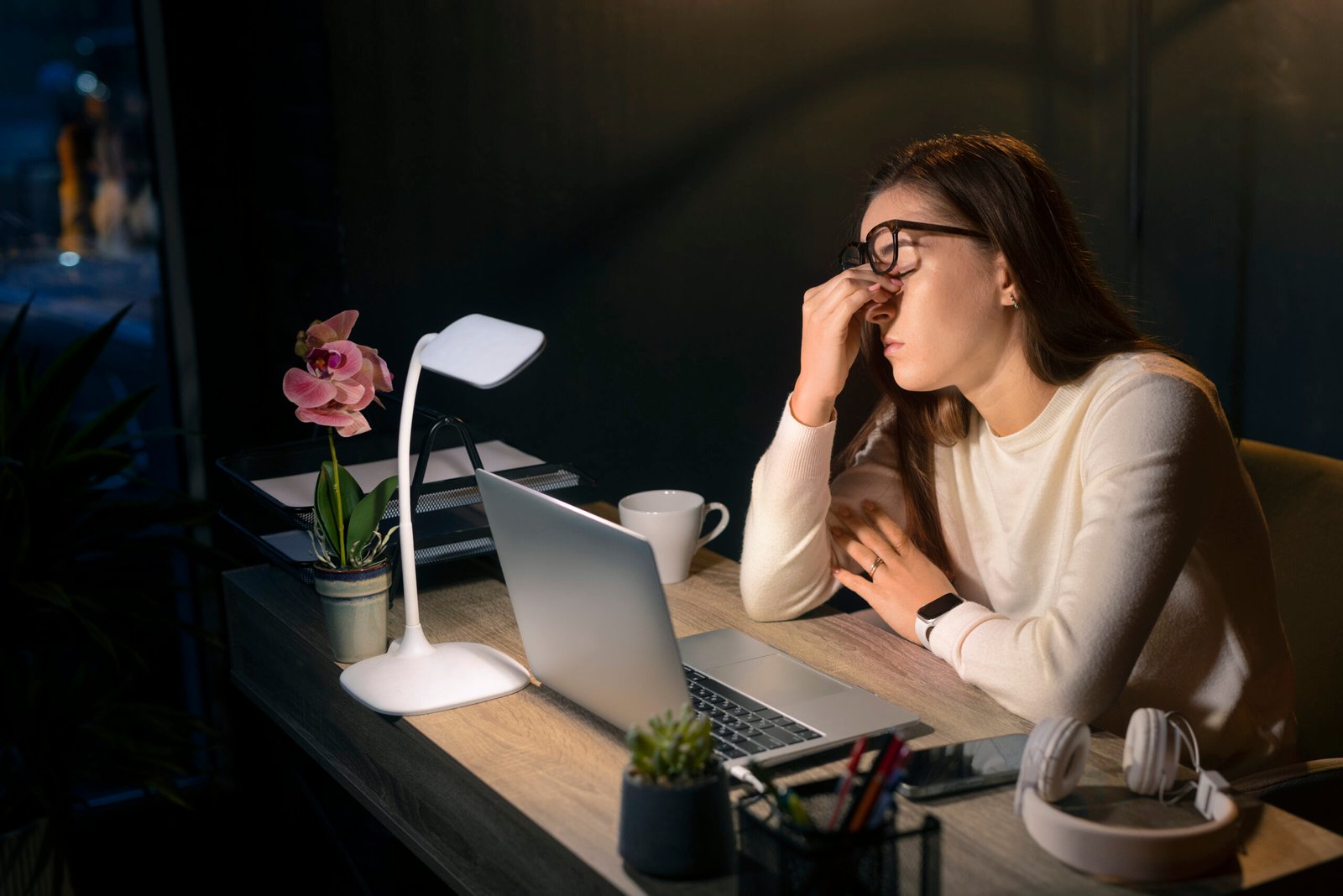
At some point, you stop blaming the screen.
You already did everything you were supposed to do.
Lowered the brightness.
Changed the contrast.
Turned on dark mode.
Installed blue light filters.
And still, at the end of the day, your eyes feel done.
Not burning.
Not hurting.
Just tired in a way that’s hard to explain.
Like they worked harder than they should have.
That’s usually when people start realizing something else is wrong, not with the screen, but with everything around it.
Contents
- 1 The part nobody pays attention to
- 2 Why nights feel worse than days
- 3 Glare is more annoying than you think
- 4 Too dark is bad. Too bright is bad.
- 5 Why desk lamps often make things worse
- 6 What actually helps your eyes relax
- 7 Why the improvement feels quiet
- 8 It doesn’t fix bad habits—and that’s okay
- 9 Who usually notices the biggest change
- 10 The honest truth
The part nobody pays attention to
Most desks look fine.
Nothing is obviously broken.
The monitor works.
The lamp is on.
The room is quiet.
But the way the light hits the desk, the keyboard, and the space around the screen quietly forces your eyes to work nonstop.
Your eyes are always adjusting.
From bright screen to dark room.
From light text to shadowed desk.
From focused work to looking away.
You don’t notice these adjustments happening.
But they cost energy. A lot of it.
And after hours of work, that cost shows up as eye strain.
Why nights feel worse than days
During the day, natural light does a lot of the work for you.
At night, it’s a different story.
The screen becomes the brightest thing in the room.
Everything around it fades into darkness.
Your eyes keep jumping between extremes.
That constant switching is exhausting.
This is why many people feel fine during the day but completely drained at night, even if they’re doing the same work.
Glare is more annoying than you think
Glare doesn’t always scream for attention.
Sometimes it’s obvious reflections on the screen, light in your eyes.
Sometimes it’s subtle—just enough shine to make your eyes tense.
Desk lamps are usually the problem here.
You move the lamp.
The glare moves.
You adjust again.
And again.
Eventually, you stop trying and just push through the discomfort.
Your eyes don’t forget, though.
They keep compensating the whole time.
Too dark is bad. Too bright is bad.
This part surprises a lot of people.
Working in a dim room is tiring.
Working under harsh light is tiring too.
Both force your eyes to work harder than they should.
The problem is that most desk setups don’t give you even lighting. They give you bright spots and dark corners.
Your eyes are constantly adapting to that imbalance.
That’s not what they’re good at for long periods.
Why desk lamps often make things worse
Desk lamps aren’t evil.
They’re just not designed for screens.
They light one spot really well and ignore everything else.
They reflect off the monitor.
They create shadows when you move.
They take up space and get in the way.
Instead of making work easier, they slowly become another thing you have to fight.
That daily friction adds up.
What actually helps your eyes relax
Your eyes don’t need dramatic changes.
They need consistency.
They want the desk, keyboard, and screen to feel like part of the same space—not like separate worlds with different brightness levels.
When lighting is even and calm, your eyes stop overworking.
You don’t think, “Wow, this is amazing.”
You think, “This feels normal.”
And that’s exactly the point.
Why the improvement feels quiet
A lot of people expect a big moment.
They turn on better lighting and wait for something impressive to happen.
Nothing does.
The desk just feels calmer.
The screen feels less harsh.
You stop adjusting lights all the time.
After a few days, you forget about lighting completely.
That’s when you realize your eyes aren’t as tired anymore.
It doesn’t fix bad habits—and that’s okay
Better lighting won’t:
- force you to take breaks
- stop you from working too long
- magically protect your eyes
What it does is remove one constant source of strain.
One less thing for your eyes to fight.
And sometimes, removing just one problem makes a noticeable difference.
Who usually notices the biggest change
People who:
- work late at night
- lose track of time at the desk
- stare at screens for hours without moving
- feel that dull pressure behind the eyes
These are the people who usually say, “I didn’t realize how uncomfortable my setup was until I fixed it.”
Not because lighting became exciting—but because it stopped being a problem.
The honest truth
Eye strain doesn’t come from one bad day.
It builds slowly.
Tiny discomforts.
Repeated every day.
Ignored until they become normal.
Desk lighting is one of those things.
When it’s wrong, your eyes work harder than they should.
When it’s right, work feels lighter.
Not easier.
Just lighter.
And for people who spend long hours at a desk, that quiet relief is usually more than enough.